
📋 Table of Contents
- 1.Understanding Schisandra Berry: The Five-Flavor Fruit
- 2.Unique Characteristics of Schisandra Berry
- 3.Cultivation and Optimal Harvest Time
- 4.Diverse Types and Regional Traits of Schisandra Berry
- 5.Schisandra Berry: Nutritional Powerhouse and Health Benefits
- 6.Storing and Processing Schisandra Berry for Best Quality
- 7.Schisandra Berry Industry: Trends and Pricing
- 8.Innovations in Schisandra Berry Cultivars
Hello everyone! Have you ever heard of a fruit that tastes like five different things at once? It sounds like something out of a fantasy story, doesn’t it? Well, today I’m going to tell you all about the amazing Schisandra Berry, also known as Omija in Korean. It’s truly a special fruit with a unique blend of flavors and incredible health benefits! 😊
I’m so excited to share all the fascinating details about this superfood, from what it is to how it can boost your health. I’ll even touch upon how it’s grown and processed. If you’re looking for a healthy and unique addition to your diet, the Schisandra Berry might be just what you need!
Understanding Schisandra Berry: The Five-Flavor Fruit
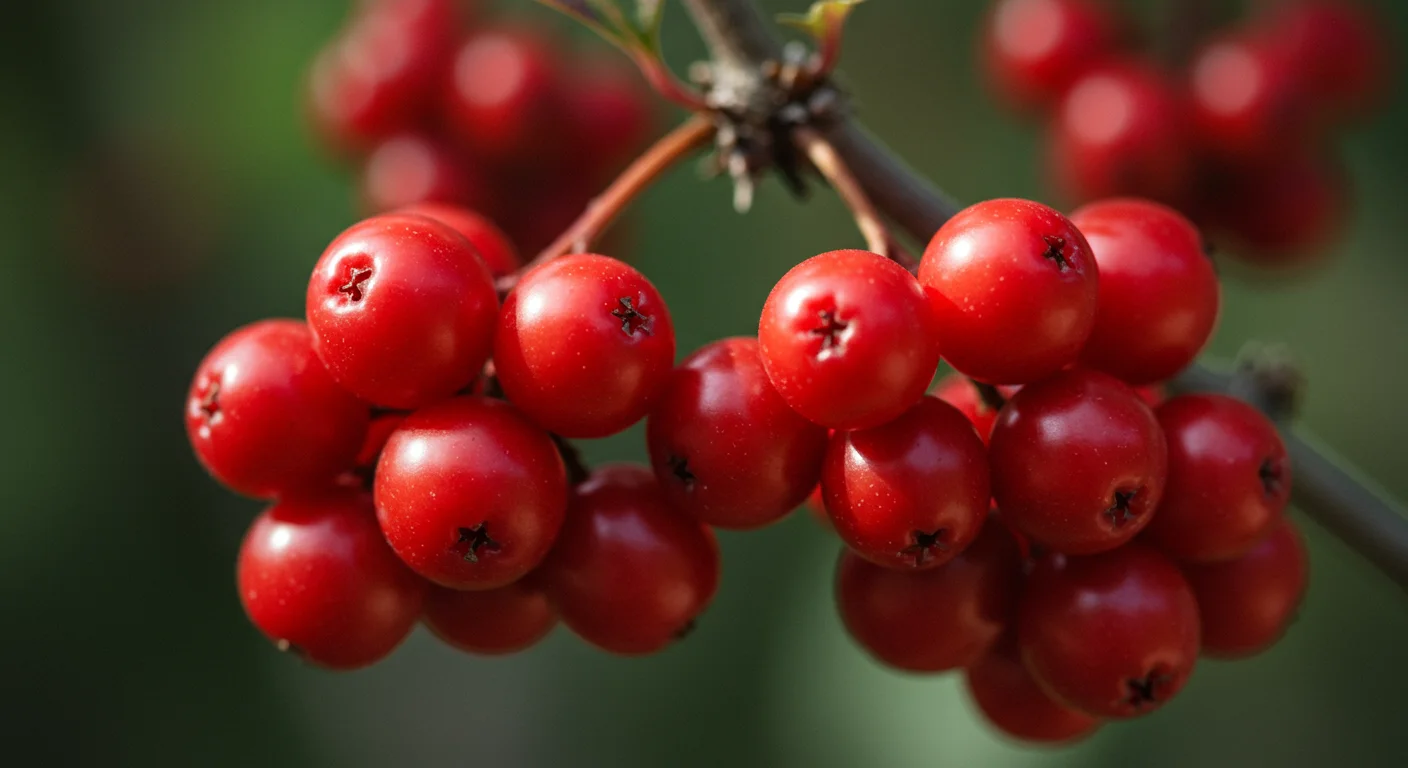
A close-up of vibrant red Schisandra berries on a branch.
The Schisandra Berry is truly special because its name, Omija (오미자), literally means ‘fruit with five flavors’! It’s said to have sweet, sour, bitter, salty, and pungent tastes all in one tiny berry. Isn’t that incredible? This unique berry, scientifically known as *Schisandra chinensis*, grows mainly in the mountainous areas of Northern China, Korea, and Eastern Russia.
The fresh berries are small, round, and bright red, usually about 1 cm in diameter. They grow on vines that can reach up to 2 meters long, with reddish stems. It’s a beautiful sight when the vines are full of these precious red pearls!
The five flavors of Schisandra Berry aren’t just for taste! In traditional Eastern medicine, each flavor is believed to benefit a specific internal organ. Sourness helps the liver, bitterness helps the heart, sweetness helps the spleen, pungency helps the lungs, and saltiness helps the kidneys. Talk about a super multi-tasker!
Unique Characteristics of Schisandra Berry
What makes the Schisandra Berry so intriguing is how its different parts offer different tastes. The skin is said to be sweet and salty, the flesh is very sour, and the seeds have a complex bitter, pungent, and even astringent taste. It’s like a whole flavor journey in one bite!
When you buy fresh Schisandra Berry, it’s often a bit unripe, making it quite sour. But if you get fully ripened berries directly from the farm, you’ll find a much sweeter taste. Freshness is super important for these berries, so they need to be consumed quickly or processed right after harvest to keep their quality. You can learn more about its fascinating characteristics here.
Cultivation and Optimal Harvest Time
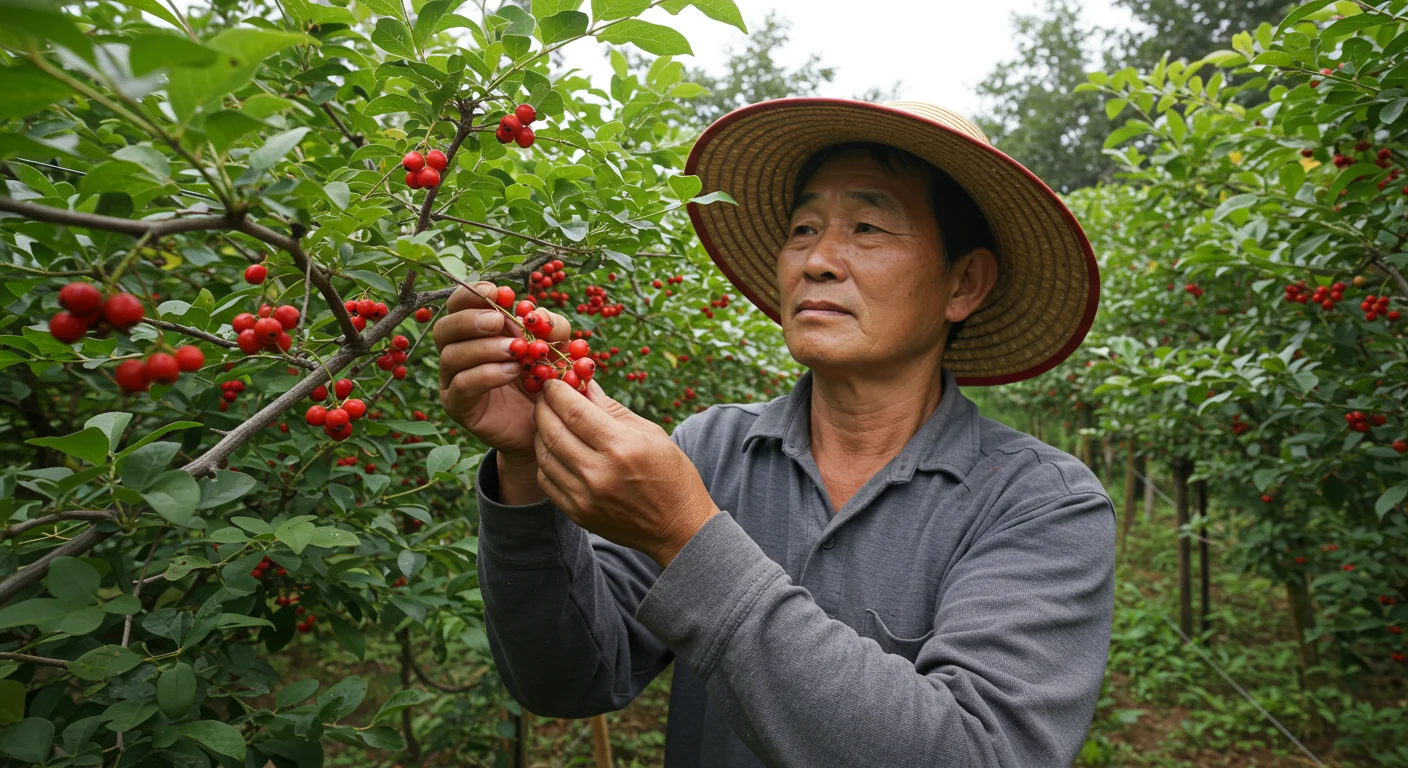
A farmer inspecting ripe Schisandra berries on a vine in late summer.
Growing Schisandra Berry is a bit of a patient process! They are usually planted in March. You can start harvesting a small amount of berries in the third year, but the serious harvest begins in the fourth or fifth year. It’s a long-term commitment for these lovely fruits!
The main harvest season is from late August to mid-September in lower areas, and it can even extend until November in high-altitude regions. But if you want the very best quality Schisandra Berry, aim for mid-September to early October, when the berries are perfectly red and shiny. Farmers usually pick them on a clear day after the morning dew has dried, being careful not to damage the branches. You can find more details on cultivation here.
Harvesting Tips 📝
- Timing is Key: Harvest when berries are bright red and glossy.
- Weather Matters: Pick on clear, dry mornings.
- Gentle Touch: Be careful not to damage the delicate branches.
Diverse Types and Regional Traits of Schisandra Berry
Just like apples or oranges, there are different kinds of Schisandra Berry! Some well-known types include wild Schisandra from Gangwon-do in Korea, Chinese Schisandra from Northern China, and Japanese Schisandra. Did you know there’s even a special black Schisandra Berry from Jeju Island? It’s known for its darker red color and is believed to be where cultivation first started.
Each region’s Schisandra Berry has its own unique flavor, color, and uses. For example, Japanese varieties are often sweeter and popular in beverages. It’s really interesting how geography can change a fruit’s characteristics, isn’t it? You can explore the different types of Omija here.
Schisandra Berry: Nutritional Powerhouse and Health Benefits
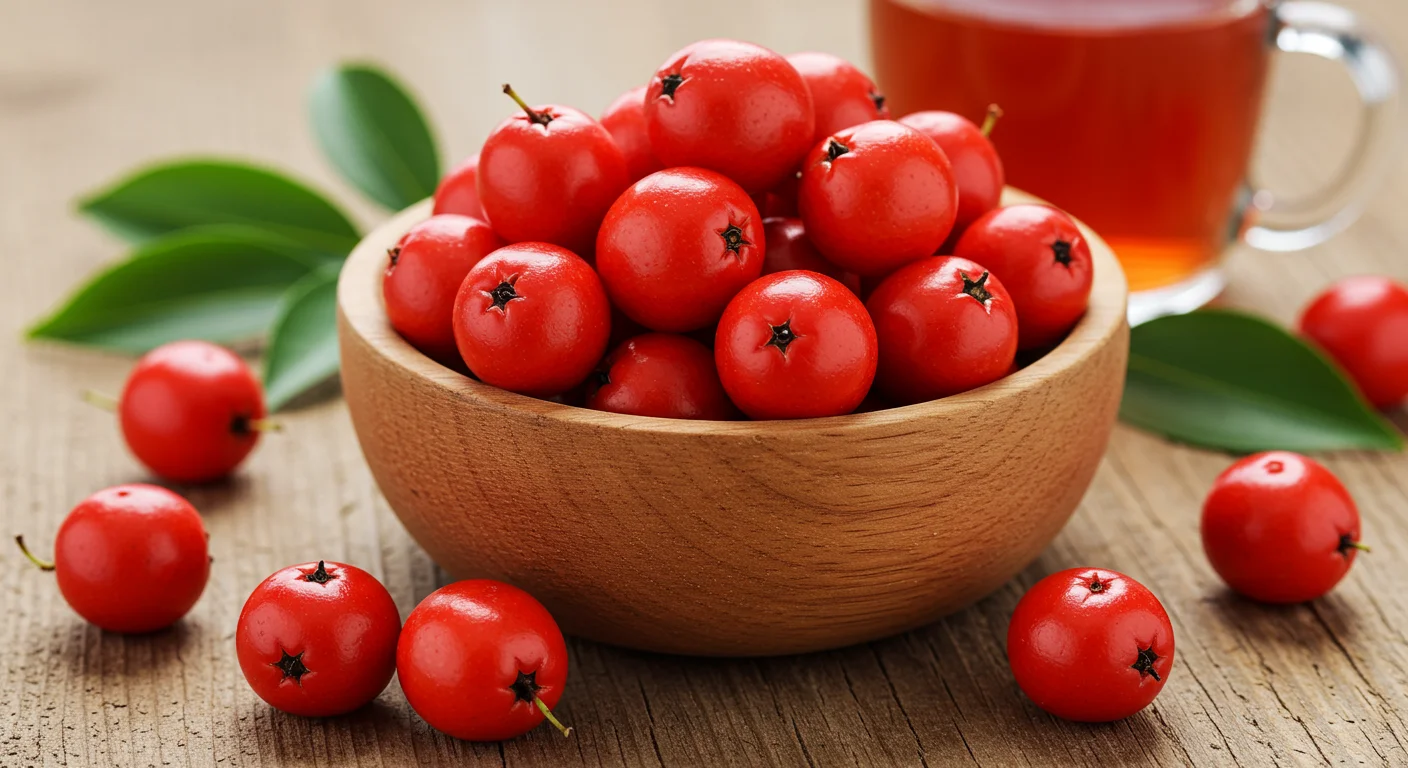
A vibrant display of fresh Schisandra berries, highlighting their rich color and healthy appeal.
The Schisandra Berry isn’t just about its interesting flavors; it’s packed with amazing nutrients! These tiny berries are rich in vitamins, minerals, and special compounds called lignans. Because of these, they offer fantastic health benefits, like being a powerful antioxidant, protecting your liver, helping with fatigue recovery, boosting your immune system, and even having anti-cancer properties.
In traditional Eastern medicine, Schisandra Berry is believed to benefit all five major organs: the liver, heart, lungs, kidneys, and spleen. It’s a true adaptogen, meaning it helps your body adapt to stress and maintain balance. No wonder it’s considered such a precious superfood!
- Powerful Antioxidant
- Supports Liver Health
- Aids in Fatigue Recovery
- Boosts Immunity
Storing and Processing Schisandra Berry for Best Quality
Since fresh Schisandra Berry doesn’t last long, people often dry them or make them into various processed products like Schisandra syrup (Omija-cheong) or tea. Drying is a popular method to preserve its goodness! Using a hot air dryer at 40-60°C for 24-27 hours is ideal to reduce moisture content to below 25%.
While sun-drying takes about 15 days and shade-drying takes about 25 days, these methods can increase the risk of spoilage. So, if you get fresh Schisandra Berry, it’s best to wash and store them immediately to maintain their quality. Many households make delicious Schisandra syrup to enjoy its benefits all year round!
Schisandra Berry Industry: Trends and Pricing
In Korea, areas like Jangsu, Muju, and Jinan in Jeollabuk-do are major producers of Schisandra Berry, with lots of new plantings happening in March. The market for Schisandra syrup is really growing, with many new products focusing on functional and sensory qualities. It’s exciting to see how this traditional ingredient is becoming so popular!
As of 2025, the retail price for 1kg of fresh Schisandra Berry ranges from 10,000 to 20,000 KRW, depending on the region and quality. Fully ripened berries often fetch a higher price, especially when bought directly from the farm. It shows how much people value fresh, high-quality ingredients!
2025 Schisandra Berry Market Overview 📝
| Category | Detail |
|---|---|
| Main Production Areas | Jangsu, Muju, Jinan (Jeollabuk-do) |
| Retail Price (1kg) | 10,000 – 20,000 KRW |
| Market Trend | Growing demand for functional and high-quality products. |
Innovations in Schisandra Berry Cultivars
It’s exciting to see that research institutes, like the Gyeongsangbuk-do Agricultural Research & Extension Services, are actively developing new Schisandra Berry cultivars! Their goal is to create berries that are more resistant to pests and diseases, yield more fruit, and taste even better. This means we might get to enjoy even more delicious and resilient Schisandra in the future!
Nowadays, Schisandra Berry is being used in so many different ways beyond just food and drinks. You can find it in health functional foods, cosmetics, and other industrial applications. Consumers are also increasingly looking for eco-friendly farming practices and high-quality fresh berries, which is a great trend for both our health and the environment!
📚 Recommended Articles
Schisandra Berry Summary 📝
Let’s quickly recap the amazing facts about the Schisandra Berry!
- The Five Flavors: The Schisandra Berry is famous for its unique blend of sweet, sour, bitter, salty, and pungent tastes, making it a truly distinctive fruit.
- Health Benefits: It’s a nutritional powerhouse, offering strong antioxidant effects, liver protection, fatigue recovery, and immune system support, as recognized in traditional Eastern medicine.
- Cultivation & Harvest: These berries are typically harvested from late August to mid-September, with the best quality found in mid-September to early October when they are bright red and glossy.
- Versatile Uses: Due to its low shelf-life, Schisandra Berry is often dried or processed into syrups and teas, and is increasingly used in health foods and cosmetics.
Schisandra Berry: Key Facts
Frequently Asked Questions ❓
I hope this detailed look at Schisandra Berry was super helpful and interesting for you! It’s truly a fascinating fruit with so much to offer. Remembering its five unique flavors and incredible health benefits might inspire you to try it out. If you have any more questions or thoughts, please feel free to leave a comment below~ 😊